Monday, April 18, 2011

The Scoop On Malbec

If you’re a Cabernet Sauvignon or Merlot fan, there’s a good chance you’ll like a good Malbec and have the opportunity to save some money! Because Malbec’s are not marketed as heavily as Cab’s or Merlot’s, and are in greatest supply from Argentina (where vineyard and winery labor is currently less expensive than France or the US), you can find a number of great values worth investing in.

Malbec is a fairly thin skinned grape variety that typically creates deep inky red or violet colored wines with core characteristics of plum, blueberry, raspberry, fig, and even licorice. In my experience, younger wines (1 to 2 years old) tend to be more fruity and simple in style, while slightly older wines can show a little cocoa, coffee, and clove with a little oak aging. Old Vine Malbec’s are frequently more concentrated and earthy in flavor with a little spice on the finish. Tannins are usually fairly mild, as expected from a thin skinned grape variety, and I’ve found them to be more the byproduct of barrel aging than anything else.

In my opinion, Alamos, Luigi Bosca, Inacayal, Gascón, and Gimenez Riili produce some very nice Malbec’s for around $10 to $25 with structure, depth, complexity, and finish that rivals that of most California Cabernet’s and Merlot’s at twice the price. Variety being the spice of life, and value a sought after commodity in a struggling economy, every red wine enthusiast owes it to themselves to give this little known treasure a taste.

Most Malbec’s pair well with just about anything you would have with a Cabernet Sauvignon, especially Meatloaf, short ribs, and steak. Though elegant enough for fine cuisine, Malbec can also liven up and compliment pizza, simple poultry, and even beans and rice. For the cheese lover, try Manchego, Romano, Gouda, and even Swiss for an incredible combination.

Monday, February 14, 2011

2008 Bourgogne / Maison Bertrand Ambroise

For just under $20, this Pinot Noir is a great starting point from which to begin a journey into the world of Burgundy wines. It’s easy to get lost in Burgundy with more than 100,000 acres of vines, 15,000 growers, and 100 or more négociant (wine brokerage) firms that purchase grapes from small producers throughout the region for blending. While négociants account for more than 70% of Burgundy’s total wine production, this 2008 Bourgogne boasts “Maison” (meaning house) along side the producer’s name, indicating that Bertrand Ambroise is a large enough producer to both grow all their own grapes, and make their own wine. Holding the classification of Appellation Bourgogne Contrôlée indicates that the producer is allowed to source any one (or all) of their own vineyards for the production of this wine, lending flexibility in their selection to insure an adequate harvest of top quality grapes for the final blend.

I found this Burgundy to be somewhat rustic in style, medium bodied, well balanced, and moderately acidic with light but dry and earthy tannins. I also experienced ripe and dusty fruit on the nose, mild yet concentrated cranberry on the palate, and a hint of tobacco on the finish. This Burgundy should pair nicely with mildly spiced dishes of grilled or roasted chicken, turkey, duck, lamb, or pork; and the addition of a wine reduction or mushroom sauce would make it even better! I could also see this wine pairing nicely with a beef stew, medium grilled fish in a rich or hearty sauce, and a number of firm and savory cheeses such as Manchego, Romano, Swiss, and Gouda.

Wednesday, February 2, 2011

August Briggs; 2007 Russian River Valley Pinot Noir

August Briggs is a family owned Napa Valley winery known for producing limited quantities of coveted wines created from various top vineyards across the northern coastal counties of California. I’ve had the pleasure of meeting Joe Briggs (the winery owner) on a couple of occasions, and I can personally vouch for his passion and dedication to making consistently great wines that are dictated not by predetermined commitment, but rather by the quantity of quality grape supply available to work with. August Briggs wines are characterized by unwavering balance and complexity, intense fruit structure, and a classy packaging highlighted by rich gold lettering and an artist’s depiction of a dandelion blowing in the wind.

The 2007 Russian River Valley Pinot Noir further validates August Briggs as a quality producer, raising the bar yet again. With only 340 cases of production, the grapes were hand sorted and de-stemmed, and the wine  underwent malo-lactic fermentation (for a more balanced level of acidity) prior to being barrel aged for 8 months (30% in new French oak, and 70% in two to three year old French oak). Being bottled without fining or filtration for enhanced character, you can expect to experience a Burgundian style California Pinot with  refined balance and a premium level of complexity. I found this wine fairly deep in color (for a Pinot) and medium bodied, with mouth watering (yet well balanced) acidity, mild floral notes of violets and jasmine, dense fruit flavors of spiced cherry and raspberry, and a long rich finish with refined notes of cigar box and sweet spice. As an additional note, this August Briggs Pinot Noir was a unanimous hit among 12 participants in a wine class I hosted last week,  featured among five other quality wines (2 Rhone style whites, a Burgundy, and a quality Alexander Valley Bordeaux style red).

This wine can be found for around $40 and should nicely compliment moderately seasoned dishes of pork, lamb, game, or beef, and a number of red wine, herb, or fruit based sauces. I would also  recommend grilled or roasted vegetables, hearty soups, or more simply even meatloaf or lasagna. If you’re a cheese lover, try a hearty Swiss, Gouda, Parmesan, Manchego, or any of your favorite savory hard cheeses.

Thursday, January 20, 2011

Liberta Toscana Collazzi 2008; Super Tuscan

With nearly 1 Million registered vineyards and a long tradition of wine making going back nearly 4,000 years, Italy is one of the largest consumers of wine, one of the largest exporters, and the 2nd largest producer in the world at nearly 1.3 billion gallons each year. An amazing accomplishment for a country only slightly larger in land mass than the U.S. state of Arizona! Thinking of wine as food, being part of nearly every meal, it should be no surprise that the Italians have mastered the creation of wine with some of the greatest natural affinity for food in the world.
The 2008 Liberta Toscana Collazzi is a Super Tuscan blend of 50% Merlot, 25% Syrah, and 25% Sangiovese, lending a new world style to an old world terrior. This is a great red table wine with the plump dark fruit and chocolate character you would expect in a Merlot, complimented with French oak, dusty berry, black cherry notes, and a mild tobacco finish. Add to that a rustic Italian personality and a velvety soft mouth feel, and we have something fun to talk about!

With a consistent 88 point rating by both Robert Parker and Wine Spectator, this is a very nice Super Tuscan available for $20 to $25. I recommend this wine to “drink now” while the fruit is fresh and vibrant, as opposed to laying it down.

Wednesday, January 19, 2011

Tasting Miner Family Wines; Including "The Oracle"

Today I participated in a tasting of 6 fantastic Miner Family wines while being narrated to (in person) by none other than Dave Miner himself. What a treat! While I’m familiar with previous vintages, today’s tasting really stood out to me as being over the top.

Three Whites Tasted: 2009 California Viognier (stainless steel fermented, shows plush and creamy impressions of peach, kiwi, citrus and honeysuckle with mouth watering acidity – available for $15 to $20); 2008 Napa Valley Chardonnay (somewhat of a Valley vineyard cuvee, as I understand it, with a tasty balance of toasted French oak and moderate malolactic fermentation, this is a crisp Chardonnay showing spicy apple and pear, melon, and citrus on the nose with a creamy custard like mouth feel – available for $25 to $30); 2007 Wild Yeast Chardonnay (fermented with natural yeast as opposed to cultured, this is a dark golden and full bodied Chardonnay with outstanding depth and complexity showing flavors and aromas of nutty butterscotch and a blooming bouquet of honey laden fruit, apple, ripe pear, and spiced apricot – smooth, creamy, and rich to say the least – available for $40 to $50).

Three Reds Tasted: 2006 Stagecoach Vineyard Merlot (blind tasted, you might mistake for a Cabernet Sauvignon due to its intense fruit and tannin structure with notes of blackberry, herbal spice, and sweet tobacco – available for $35 to $40); 2007 Stagecoach Vineyard Cabernet Sauvignon (with a moderate tannin structure leaving a nice mouth feel and a worthy finish, this is a classic Cabernet with depth and complexity showing concentrated flavors of black cherry, cassis, and licorice laced with well integrated French oak – available for $55 to $60); And finally the Flagship, the 2006 Oracle (50% Cabernet Sauvignon, 23% Cabernet Franc, 17% Merlot, 5% Malbec, and 5% Petit Verdot – available for $80 to $90). How do I put this into words…WOW! This is a concentrated fruit, vanilla, and herb driven, powerful and complex Bordeaux blend with incredible structure, a soft French oak presence, fantastic mouth feel, and a notable finish lasting a full 2 minutes on MY palate. Some of the specific aromas and flavors I found included blackberry, currant, vanilla spiced oak, and cocoa.

Founded in 1998 by Dave and Emily Miner, along with his folks Ed and Norma, Miner Family Vineyards has maintained an unparalleled commitment to product quality and customer service. While I’ve not yet been, their tasting room is open to the public and comes highly recommended. If you ever have the opportunity to meet Dave, you’ll immediately recognize his fiery passion to not only make great wine, but to ignite something in everyone around him to expect nothing less.

Saturday, January 8, 2011

Neyers Cabernet Sauvignon AME, 2006 (Napa Valley)

100% Cabernet Sauvignon from organically farmed Conn Valley ranch, rated 91 points by Robert Parker / 92 points by Wine Spectator, this full bodied Neyers Cabernet is sure to earn loyalty from the purest at heart.

AME “ahm” (French for “soul”), is a fitting description for such an intense Cabernet. You can expect a wonderful dusty like berry cuvee, black currant, and black cherry with subtly integrated licorice, spice, and sage on the nose that continues on the palate with a long complex finish and healthy tannins that can easily be enjoyed today with intensity, or in 10 to 15 years for a softer mouthfeel and a complex fruit structure one could only imagine.

The heart of this wine is reflective of the hillsides and valley floor from which it’s birthed, located in the hills east of St Helena at elevations ranging from 300 to 1200 feet. Bruce and Barbara Neyers (founders of Neyers Vineyards in 1992) have been dedicated to sustainable organic farming since 1998, with the reward yielding richer, more complex, and more flavorful fruit matched by few competitors, not to mention the improvement of overall soil health and crop viability promising consistent quality for years to come.

You can expect to see this Cabernet Sauvignon for anywhere from $70 to $80 per bottle (more than a fair price for such quality, organic care, a limited 550 case production, and the personalized attention of renowned winemaker Ehren Jordan from Turley Cellars). Be it a gift for a great friend or for yourself, or to pair with a quality marinated steak, Neyers Cabernet Sauvignon AME is sure to impress!

Thursday, December 16, 2010

Krug Grande Cuvee; Champagne fit for kings!

I had an incredible opportunity this morning to taste 3 classic Krug Champagnes, the third being the great Krug Grande Cuvee. To call this the Cadillac of Champagnes would be an insult! More like the Lamborghini Reventon I’d say (you might want to “google” that so we’re on the same page). Blended from multiple growths, over six to ten different years, and as many as 150 parcels, this champagne truly is an ageless symphony of harmonizing aromas and flavors that continue to open and evolve with every savored sip. I found it to have a very complex and ever changing nose of butter-cream, grain, biscuit, honey, and ripened tree fruit with incredible depth and boldness. That’s just the beginning! Let me see if I can paint a more vivid picture. Imagine your grandmother’s apple pie baking in the oven (assuming she was a great cook resulting from generations of teaching and the beneficiary of treasured family recipes from at least a century past), homemade completely from scratch with a rich and flaky buttery crust and fresh specially seasoned apple filling. You’re getting closer, but there’s still something more. You know where the apple filling oozes out around the finger pinched crusted edge, thickens, turns to a syrupy golden brown, and even burns (just a little) here and there? Now you’re getting it! You really have to try this champagne for yourself to grasp its quality. A culmination of Krug family tradition dating back to 1843 founded by Johann-Joseph Krug, the Grande Cuvee is truly a sensational taste experience fit for kings.

Carrying a 95 point rating from Wine Spectator, quality does come at a price - especially when it’s in limited supply. Considering that Krug champagnes account for less than half of 1 percent of champagnes available in the market, count yourself lucky to even find the Grande Cuvee, let alone for anything less than a worthy $150. But hey, it’s CHRISTMAS! Not to mention that we're about to break from the chains of 2010, and celebrate in a new year of hope and breakthrough... Krug Grande Cuvee would be a great pinnacle on which to start.

Monday, December 6, 2010

Aging Wines: What to lay down and what to drink

A wine is worth aging if it has the ability to improve in quality over time. While wine is perishable and capable of going bad, there is an evolution that takes place in the bottle involving complex chemical reactions associated with sugars, acids, and tannins that will affect the aroma, color, mouth-feel, and overall taste. While the preferred profile of a wine is going to be subjective, most “in the know” will agree that not all wines will improve with age. Grape variety, viticultural practices, region, vintage, and style will influence a particular wine’s ability to successfully age and mature, as will the condition in which it’s kept.

In general, wines with high tannin levels and/or a low PH will have a greater capability of aging – most notably complex or full bodied red wines such as Cabernet Sauvignon, Merlot, Nebbiolo, Syrah, Pinot Noir, and Sangiovese to name a few. Although, just because a wine has a greater capability of aging, doesn’t necessarily mean it will be significantly beneficial. In reality, probably less than 10% of all red wines, and 5% of all white wines are likely to improve significantly enough with age to justify laying it down for more than a year or two. In fact, most inexpensive to moderately priced wines (say $5 to $25 per bottle) purchased in stores today are ready to drink now. A good reason to age a particular wine would be to soften over-powering tannins and better reveal a more mature bouquet of flavors and aromas. There’s really no good reason to age a wine that already has soft tannins and an enjoyable fruit structure. In fact, aging an inexpensive to moderately priced wine can be more detrimental than not, as the fruit and floral aromas may begin to diminish, and volatile chemical and alcohol related off aromas set in.

With age, you’ll notice that white wines will tend to darken, and red wines will lighten as oxidation takes its toll on the pigmentation. Both will take on a yellow or golden hue that will ultimately appear as straw in whites and amber or brick in reds, before finally turning to brown as they begin to break down, over-oxidize, and eventually spoil. Additionally, almost all wine will begin to develop sediment with age as tartaric acid begins to crystallize, and proteins and tannins bond to form particles of matter. In any case, if you decide to lay a wine down, be sure to keep it out of sunlight and at a consistent temperature as close to 65 degrees as possible. Once opening, the use of a decanter will help blow off volatile off aromas, restore a pleasant bouquet, and separate unwanted sediment.

I believe that more wine is consumed too old, rather than too young, as I too have been guilty of aging wines for no better reason than because I was saving good bottles for perfect occasions that never seem to be good enough to warrant opening them. I wonder how many bottles of wine are left behind, or go bad, because they were forgotten or left behind by those passing on. Enough is enough! There is no promise for tomorrow! Pull that cork, bond with some American, French, Italian, Spanish, or Argentinean terroir, and enjoy life while you can!

Monday, November 22, 2010

Expensive Wine vs. Cheap Wine: What’s the Difference?

Contrary to popular belief, the margins are surprisingly similar in new world wines! Besides the obvious price differences in “buying power” between a small winery and a large conglomerate when it comes to product and materials, there is a significant quality factor at play (which comes at a great difference in expense).

Mechanical Night Harvest
A large conglomerate that mass produces an inexpensive new world wine will typically utilize a mechanical harvest that isn’t selective about the grapes it’s dropping. That’s right, I said “dropping”. A mechanical harvest typically involves a tractor that mechanically grabs, and shakes the vines until the grapes drop to the ground or into a catch and conveyor that dumps them into a large bin. While this is a fast and efficient method for a massive harvest, keep in mind that bruised, ripe, unripe and even rotten grapes are gathered along with bugs, bird droppings, sticks, leaves, and anything else you can imagine to be thrown into the crush. While a certain amount of human interaction is involved for sorting, only the large and obvious issues are likely to be tended to - especially during night harvests. In good humor, you might say there is likely a good representation of nature (rather than terrior) in a $4 bottle, or a $15 to $20 box of wine. Unfortunately, when you press all the ____ in with an inconsistent quality of grapes (if you’re lucky, it’s all floated or rinsed in hose water prior to the crush), all you’ll likely get is a light bodied, bland, watered down, slightly fruity, and low quality glass of wine. Sound familiar? Oh, and it’s typically going to be spiked with the maximum allowable level of sulfites (in the form of sulfur dioxide powder) to act as a preservative, slow oxidation, and inhibit the growth of bacteria both in the wine and the winery equipment. Rather than consulting the services of an experienced wine maker to assist in arriving at a premium product with optimum flavor, body, and finish, the goal is simply to make the wine drinkable and tasty – which, when I was a college boy and didn’t know any better, was good enough to quench my thirst without leaving me broke. While there are going to be exceptions to the rule (as higher quality organizations may invest more in the sorting process), just remember that as in nearly everything, you get what you pay for.

You can expect quite the contrary from a more expensive wine, as the grapes have usually been hand harvested (in some cases multiple times to insure optimum quality and ripeness), and great pride and care has gone into the entire process. Most of your higher quality wines could actually qualify as certified organic (lacking only the extensive government imposed paperwork, costly permits, and time consuming inspections) – considering the level of “hands-on” daily attention employed in the vineyard. An experienced (and usually well known) wine maker is hired (or at least consulted) to assist in developing a polished and high quality finished product that meets the target goals and expectations of the winery owner. The wine is aged to an optimum level before being shipped to selective outlets, and samples are submitted to well known rating services such as Robert Parker and Wine Spectator to add respectable credibility and earn public trust in the market. A legacy of quality, respectable ratings, and a loyal customer following can increase demand for a limited production wine to the point that the price may seem out of reach for many. However, while quality comes at a price, it’s usually available from around $12 to $15 per bottle for a young and light to medium bodied fruity wine, to $18 to $75 for a slightly older, medium to heavy bodied and complex wine with a longer finish. In short, lower price equates to less attention to detail that was applied both in the vineyard and the winery, which will be reflected (and is typically easily detectable) in the quality of the final product.

If you’ve ever wondered why you should buy a $30 bottle of wine rated 90 points by Robert Parker, when there’s a $15 bottle rated at 88 points, keep in mind that the point system is also relative to price (not to mention someone’s opinion). That $30 bottle of wine would likely be rated much higher if sold for much less, or significantly lower if sold for much higher. Once again, rest assured that you’re usually getting what you pay for.

Monday, November 15, 2010

Wine & Headaches

Millions of people report getting headaches after drinking wine, and I’m not necessarily talking about a hang over the next day. Some people report getting headaches after drinking white wine, others after drinking red, and some after drinking ANY wine. I’ll admit that even I get headaches now and then after drinking red wine, frequently after drinking cheap red wine, and sometimes even after eating a lot of cheese. If you’ve ever wondered what brings this phenomenon on, this article is for you!

While dehydration can play a significant roll in how you’ll feel the day after drinking, there are different things that influence the way your body metabolizes alcohol. DNA, age, gender, health, and your level of physical activity all play a roll in how each of us reacts to alcohol. Regardless, there are a few common factors to be considered, such as tryamine, histamines, tannins, and sulfites.

Tyramine is a chemical found in red wine that is said to dilate blood vessels, which can trigger migraines in some people. Tyramine is typically produced during fermentation of food products, which means it can be present in over ripened or dried fruit, matured or aged meat, processed food, and cheese. While cream cheese has little notable amounts of Tyramine, most aged cheeses are highly concentrated along with cured meat, fermented soy products (such as sauces and tofu), and any processed food containing yeast extract or shrimp paste. If Tyramine is causing your problems, you might try sticking to less concentrated white wines and cutting back on aged and cured foods a little. Or if you’re like me, you’ll just take it in stride and “suffer” the side affects now and then.

Histamines are organic nitrogen compounds that triggers an inflammatory response in your body. Histamines are found naturally in fermented foods and beverages by the fermenting of bacteria or yeasts, and are reportedly more prevalent in red wine than in white. There are a number of “experts” around that dispute any evidence to this, but I’ve known people that will actually begin sneezing sporadically, and start sounding like they’re coming down with a cold after 4 or more glasses of red wine (while showing obvious signs of intoxication). According to Wickipedia, wine contains 2-10 mg of histamine per liter, while Sake contains 20-40mg/L. More likely than not, histamines would potentially have a magnifying affect on a person who already suffers from allergies during such profiled seasons. Either way, it shouldn’t be too difficult to accept the idea that you could get a sinus headache from drinking too much red wine. I’ve heard of people taking an inhibitor an hour or so before consuming red wine (such as aspirin, acetaminophen, or ibuprofen), but be sure to adhere to their warnings that if you consume three or more alcoholic beverages per day, you should consult with a doctor before taking their product.

Tannins are the flavonoids found in grape skins, stems, and seeds that give a wine that mouth-drying sensation when left in contact with the juice during production. While tannins are typically more noticeable in red wines (as that’s where they derive their color), they are also absorbed through barrel aging. Some experts have reported that tannins can cause the release of serotonin (a neurotransmitter), of which high levels can cause headaches in people who suffer from migraines. If tannins are the cause of your headaches, you could try limiting your wine consumption to whites that typically forego barrel aging – such as Riesling, Italian Pinot Grigio, or Torrontes.

Sulfites occur naturally in all wines (protecting them from oxidation and bacteria), and can also be added as a preservative to enhance the aging process. Without that sulfur, grape juice would simply turn into vinegar. Generally speaking, white wines will typically contain more sulfites than red wines, and sweet dessert wines will contain more than dry wines. While sulfites are reported as being among the top nine food allergens, less than 1% of the population is supposed to have a reaction to them, and at this time there are reportedly no reliable studies that link sulfites to migraines. If sulfites are your main concern, then it should also be noted that they’re used as a food preservative as well (especially in dried fruit and potato products), and can be labeled as sulfur dioxide, potassium bisulfite or metabisulfite, sodium bisulfite, sodium metabisulfite, or sodium sulfite. Asthmatics and people with aspirin sensitivity are warned that they may be at an elevated risk for sulfite reactions that typically include sneezing, swelling of the throat, and hives.

Do your homework and you’ll find numerous reliable studies that support the information provided above. On a more personal note, I’ve found there to be a number of ways for the average person to avoid minor headaches from drinking wine. When I was a youngster in the Air Force working on planes, I had the opportunity more than once to witness the miraculous “hang over” combating attributes that a pilot’s oxygen mask held. It’s pretty amazing how breathing low pressure pure oxygen for a minute or two can knock out a headache better than any drug on the market. While I can’t recommend trying this at home (due to obvious dangers), you should make a mental note of the cause and effect. If you’ve ever wondered why one day you can drink to your hearts content with no negative “day after” affects, and then another day you suffer with a terrible headache after barely drinking anything, you should consider your level of activity. The harder you’re breathing and the faster your heart is beating, the more oxygen is being brought in and pumped throughout your body. In general, your liver can metabolize one 5oz glass of wine per hour with minimal side effects. However, you can get a leg up on the task if you’re healthy, active, hydrated, and eating something while you drink. I’ve found that I’m more likely to get a headache after drinking a glass or two of wine when I drink alone and I’m sedentary, than when I’m with company and having a good time. Besides, a bottle of wine is always better when shared with someone!

Monday, November 8, 2010

Amarone della Valpolicella

Better known as simply “Amarone” (Ah-ma-ROH-nay), this is typically a powerful, high-extract Veronese (Italian) wine often showing ripe and raisined fruit, earth, and smoke. Amarone will generally consist of 50 to 70% (or sometimes even more) Corvina grapes (a cool climate red variety from the Veneto region of northern Italy), and blended with lesser percentages of Rondinella and Molinara grapes, and sometimes even Sangiovesse and Pinot Nero, all dried prior to pressing to concentrate the juices and maximize skin contact bringing tannins, color, and intense flavor to the wine. While traditionally the grapes were air dried on straw mats, today it’s typically done in controlled drying chambers to minimize handling and help prevent the onset of Botrytis cinerea (fungus or rot).

If you prefer a high alcohol dry red wine, this is a great choice easily showing 15 to 17% (with a legal minimum of 14%). However, with the labor intensive process required to produce a quality Amarone (and release dates often 4 or 5 years after harvest), you can expect to pay a worthy price ranging from $25 to $100 or more.

Ossobuco with Risotto
While some prefer to drink this wine by itself after a meal (as it can be a little difficult to pair), it can still compliment strong and richly flavored foods such as Parmigiano-Reggiano or true Gorgonzola cheese, or a slow cooked beef dish or Ossobuco (cross-cut veal shanks braised with vegetables) with red wine and broth. Another great match would be slow cooked beef ribs and potatoes with Sicilian Caponata (a cooked vegetable salad consisting of chopped fried eggplant, celery, and even stewed tomatoes if you like). The idea (or suggestion) is to pair this intense wine with a strongly favored cheese or slow cooked dish from the general region of its origin to recognize its full potential.

Monday, November 1, 2010

Champagne & Sparkling Wine

Before embarking on my educational path to wine, I had always heard that the only difference between Champagne and Sparkling Wine was its origin (referring to Champagne only being from Champagne, France), and that the size of the bubbles was an indication of its quality. Um, there’s a little more to it than that. Here’s a little history, a brief and interesting explanation of how quality sparkling wine is made, and a few simple suggestions for selecting a delicious bubbly.

It’s true that only sparkling wines produced in Champagne, France should technically be referred to as “Champagne”, and those made elsewhere as “sparkling wine”. As for the history, it’s said that Champagne was accidentally discovered by the Benedictine monk Dom Perignon (1638-1715); however, most of those stories you’ll find posted on the web are a bit far fetched. In reality (dating back to the 17th century), the Champenois were competing with their Burgundian neighbors to the south to produce similar quality RED wines, but the grapes struggled to ripen fully with the colder temperatures in Champagne, and they (the cooler temperatures) also caused fermentation to halt prematurely in the cellars (leaving dormant yeast cells). When the warmth of the spring hit, fermentation would start up again (now in the bottle) resulting in the release and buildup of carbon dioxide gas. With pressure building inside of the weak early French glass bottles, they would explode causing havoc in the cellars. If the bottle survived, the wine had bubbles, and was considered to be faulty. While Dom Perignon and the rest of the late 17th century Champenois wine makers were trying to rid their wines of the troubling bubbles, the British were developing a taste for them. As you can imagine, if fermentation was thought to have finished, the wine was bottled, sold, and shipped before the chaos of a warm spring began. As time went on, more Champenois wine makers were trying to make their wines sparkle deliberately, as it eventually became a favorite among the nobles. For years they struggled to control the process and make wine bottles that were strong enough to withstand the pressure. It wasn’t until the 19th century that the obstacles were finally overcome, and the modern Champagne wine industry was birthed.

Methode Champenoise (pronounced: meh-TOHD  sham-pen-WAH) or “the Champagne Method”, also known as Methode Traditionale outside of France, is a time honored process (historically evolved and perfected) that typically takes a year or more to fully complete. It is considered to be the most natural and highest quality method in the production of top quality sparkling wines. Basically, the wine goes through two stages of fermentation, the second actually being in the bottle you’ll end up purchasing. Carbon dioxide develops naturally (as opposed to being artificially injected), and more than 100 PSI will build up in the bottle eventually dissolving into the wine. Spent yeast cells will sink to the bottom of the bottle and form sediment (called lees), and many quality wines will be aged in contact with the lees to add a creamy mouth-feel to a rich and flavorful sparkling wine. Once the aging period is over, the necks of the bottles (having been kept upside down and in constant motion during this second fermentation) are frozen, the bottles are turned right side up, the caps are popped, the frozen lees (formed into plugs) shoot out, and the bottles are corked before the carbonation escapes the well chilled wine. Compared to other methods, sparkling wines produced by Methode Champenoise (which is the only method practiced in Champagne, France) will typically show nicer and longer in the glass with rich yet delicate and complex nuances, and countless streams of dazzling bubbles leading your nose to a crisp vapor of succulent fruit.

Sparkling wines are typically available from very dry to sweet (offering various appealing styles to satisfy your preference or pair with your favorite dish) and are usually labeled as follows (bolded are the most common found in stores here in the US):

Brut Nature (bone dry) - 0 to 3 grams of sugar per litre
Extra Brut (nearly bone dry) - 0 to 6 grams of sugar per litre
Brut (very dry) - 0 to 12 grams of sugar per litre
Extra Sec or Extra Dry (off-dry to dry) - 12 to 17 grams of sugar per litre
Sec or Dry (semi-sweet) - 17 to 32 grams of sugar per litre
Demi Sec (sweet) - 32 to 50 grams of sugar per litre
Doux or Sweet (very sweet) - 50+ grams of sugar per litre

A sparkling wine labeled “Blanc de Noir” simply means that it’s a white wine made from Pinot Noir (or black) grapes. Because the skins are removed before the color is extracted, it will still typically appear as a white (or pink) sparkling wine, and its flavor can be fairly full bodied and complex.
A sparkling wine labeled “Blanc de Blanc” means that it’s a white wine made from white (or green) grapes (typically Chardonnay) and is usually a lighter and fruitier version than a Blanc de Noir.

Your safest investment is to make sure the sparkling wine you purchase is either from Champagne, France, or is labeled as having been produced by Methode Champenoise or Methode Traditionale. In my experience, most wineries willing to invest the necessary (costly and time consuming) efforts required for this method are more likely to have a quality product worth trying. While you can find sparkling wines made by Methode Champenoise for as little as $7 per bottle in some stores, you’re likely to better enjoy something around the $20 to $40 range that will typically show more depth and unique complexity, and better reflect its regional terrior as well as the creative touch of its maker.

Remember, just because it’s a “sparkling” wine doesn’t mean it has lost its affinity for food. Champagne doesn’t need to be limited to special occasions, celebrations, and dessert. Like other white wines, it still pairs nicely with a number of cheeses and great dishes like crab and lobster, Mediterranean prepared veggies and fruit, Asian dishes,  chicken, and so much more!

Don’t be afraid to experiment while you celebrate life!

Monday, October 25, 2010

Pairing Wine & Food

I once read that wine is to the French and Italian table as salt and pepper (or healthier substitutions) are to the American table. While there was a time it might have been that simple, today we have a vast number of grape varieties and unique wines from around the world at our fingertips, fantastic cuisines from every ethnicity pumping out over the food network, and five star recipes printed in magazines and shared all over the web. Making a selection from hundreds, even thousands of fine wines available in any given store in hopes of successfully pairing it with dinner can seem like a daunting task. It’s no wonder that most people will get stuck on one or two wines, and drink them with everything. What are the rules of pairing wine with food? Where do you start? How much will you have to spend? How many wines will you have to taste through? It’s really not as complicated as it sounds.

There are NO rules because taste is subjective. That being said, there are some very good and logical suggestions, and a chronological order for their consideration.

1. LEVEL/QUALITY - Pair the wine with the level of occasion and/or the quality of the dish. You wouldn’t dip a quality and well prepared filet mignon in ketchup, well it’s probably not a good idea to drink a $4 bottle of wine with it either.
2. WEIGHT - Pair the weight of the wine with the weight of the dish - light wines with light dishes, heavy wines with heavy dishes.
3. MIRROR - Pair a wine that mirrors the flavors and characteristics of the dish. Are you using a butter or fruit sauce, pepper, or herbs? You might consider a wine that shares those same characteristics.
4. FAT - For a heavier dish with high levels of fat, it’s a good idea to remember that acid cuts through fat, and tannins stand up to it. So consider either a medium to highly acidic wine, or one with heavy tannins.
5. LOCATION - Consider location and/or ethnicity in your pairing. Not necessarily the meat, pasta, or veggies, but the style in which it’s prepared – Mediterranean, Asian, Cajun, Italian, French, etc. If available, try matching a wine from the same region.
6. SPICE – A chilled slightly sweet wine will tame the heat of a dish and bring out its flavor. Avoid tannic wines as they irritate the soft tissue of your mouth to create the dry feeling you get, and will actually make a spicy dish seem even spicier while totally blocking the flavor.
7. DESSERT – Because a sweet wine will typically have a high level of acidity to balance its sweetness, you should make sure that your dessert wine is sweeter than your dessert. Otherwise, your dessert could strip away the sweetness of the wine, leaving an unpleasant level of acidity on the palate.

While there are no perfect food and wine pairings (because everyone tastes things differently), the truth is that most wines go with most foods. Don’t get stuck on “rules”, drink what you like! Most stores have their wine divided into regions, and by variety within each. Start with the 8 main (4 white and 4 red) international grape varieties (Riesling, Sauvignon Blanc, Pinot Gris/Grigio, Chardonnay and Pinot Noir, Syrah/Shiraz, Merlot, Cabernet Sauvignon). You’ve probably done a little research to create your dish, now do a little research to pair your wine. Or, determine the basic type of wine you want to pair with your dish, and go to a specialty wine store with a knowledgeable staff that can help you find it. Know your budget and stay within it. There are some very good wines in the $9 to $12 range, and great wines in the $18 to $30 range. Simply put, if you can afford better than that, your reward will usually be a more complex wine with a longer finish.

EXPERIMENT AND HAVE FUN!

Tuesday, October 19, 2010

Ambiguous Fruit Descriptors For Wine

I was recently participating in a weekly wine tasting ritual with a colleague of mine where we break down and define various glasses of wine following a sequence consistent with the certified sommelier exam. In this process we found it humorous that we were making references to fruits we’ve never tasted, and to make it even more ridiculous we discovered we were trying to reference fruits we couldn’t even define. Finding this unacceptable, we were prompted to do a little research for the sake of clarity. There are three fruit descriptors that are particularly ambiguous among most wine enthusiasts I’ve come across.

Currant
Among the definitions I found were these: A small seedless raisin, and/or the small, edible, acidic, round fruit or berry of certain wild cultivated shrubs, and/or any various similar fruits or shrubs. A small dried seedless grape of the Mediterranean, a member of the gooseberry family. Currant can be black, red, or white. 

Cassis
Among the definitions I found were these: A black-currant cordial, black currant liquor, a brandy distilled from black currants. In wine tasting, this term should be used over black currant to denote a more concentrated, richer flavor.

Stone Fruit
Among the definitions I found were these: A fruit with a stone (or a pit) or hard endocarp, such as a peach or a plum, the non-technical name for drupe which is defined as any fruit, such as a peach, cherry, plum, nectarine, apricot, etc., consisting of an outer skin, a usually pulpy and succulent middle layer, and a hard and woody inner shell usually enclosing a single seed.

While taste is still very subjective, even for the purpose of fruit descriptive references, this should provide a common ground of understanding and photographic clarity.

Friday, October 15, 2010

OAKED or UN-OAKED? That is the question!

There are many preferences regarding oaked verses un-oaked wines, but most of them in my experience are based strictly on the robust flavor of OAK itself. Did you know that a wine can be aged in oak without really having any “woody” characteristics at all? Would you associate the delicious flavors of dark chocolate, butterscotch, or molasses with an oaked wine? You should, because that’s one of the only natural ways a wine maker can manipulate those layers of complexity into their product. You can usually tell if a wine has been aged in oak by its aromas and flavors.

French Oak and American Oak are the most common types of barrels used for aging wine. French Oak is more commonly used for higher quality wines as it adds elegant flavors like vanilla, cinnamon, cloves, and nutmeg. American Oak typically adds more aggressive flavors of vanilla, toasted coconut, and dill. The more a barrel is used, the less effective it is in contributing to the wine in terms of flavor; consequently, most barrels are only used once or twice before being discarded or sold for other uses.

Here are some barrel aging associations you can relate flavor to the next time you’re characterizing a wine:
General wood flavors include the obvious: oak, cedar, sawdust, and even cigar box (which is a fairly common characteristic found in Pinot Noirs and Cabernet Sauvignons).
Less obvious wood flavors include vanilla, cinnamon, cloves, nutmeg, toasted coconut, dill, and even black pepper (which is a fairly common characteristic found in a Red Zinfandel).
Charring on the inside of a barrel can produce flavors of smoke, toasted bread, and campfire, as well as coffee, dark chocolate, and nuts.
Oxidation aromas from barrel aging can also reflect caramel, butterscotch, honey, and molasses in the wine.

FYI: The buttery flavor characteristic of many domestic chardonnays is NOT typically a result of oak barrel aging, but rather of Malolactic Fermentation (which is a secondary fermentation process where malic acid is converted to lactic acid via Lactobacillus bacteria).

So the next time you’re tasting a wine and someone asks if it has been barrel aged, you’ll be able to make a more accurate and worthy assumption, be able to explain theoretically why you’re leaning one way or the other, and your friends will marvel at your wisdom and skill!

Wednesday, October 13, 2010

Aromas & Flavors In Wine, How To Find & Define Them

Have you ever shared a glass of wine with someone that had the ability to describe the aromas and flavors you’re sensing, when you had no idea until they suggested it? Now here’s the key, were you able to respond saying, “hey…I do sense that”? If you’ve ever wished you could do that, there is hope! I’m here to tell you that YOU CAN! Are you able to recognize the taste of apple, pineapple, lemon, melon, or pear? How about black cherry, blackberry, raspberry, plum, cinnamon, or chocolate? Of course you can! And if you can’t, then you should taste and smell these things until you can. The next time you’re in a supermarket, go through the produce section and pick up different fruits and vegetables and SMELL THEM! Start smelling everything – wood, tree bark, aluminum, etc. It won’t cost you anything, and you’ll familiarize yourself with a whole new world of aromas. Now here’s the trick, the next time you’re having a glass of wine, don’t leave your senses in the dark to randomly guess the aromas or flavors that might be present – unless that works for you. Consider what you’re drinking, along with characteristics that are common in it, and specifically ask yourself if you can taste them. For example, if you’re enjoying a dark red wine, be specific and intentionally think to yourself, “do I taste blackberry, raisin, blueberry, cocoa, spice, cracked pepper, tobacco, or oak?” Or if you’re having a white wine, specifically think, “do I taste tropical fruit, citrus, pineapple, apple, lemon, melon, or pear?” Is the fruit ripe or green? Do you detect minerality, grass, or oak?

As you become more experienced, you can use this same technique to define a glass of wine in a blind taste setting. Be positive and intentional, don’t give up, and never say “I can’t”! I’ve heard so many people say, “my nose just isn’t as sensitive as yours”…or “I’ve never been good at breaking down a wine”. Interestingly enough, those same people will ask, “what am I supposed to taste here”, have you read the back of the bottle to them, and then say, “I get that!”. Stop letting other people dictate taste to you. It’s subjective and should not be the result of suggestive manipulation, although the latter can be fun to try now and then.

Monday, October 11, 2010

Just How Old Is Your Wine?

With that title you probably thought I was referring to the wine that might be in your glass. I’ll get to that a little later, but your original impression wasn’t too far off – it’s all how you look at it. We may refer to vintages by the year the grapes were harvested, but I assure you that without a rooted vine, there would be no wine. So here’s a few thousand years of wine history summed up in a paragraph or two for a common foundation.

Ancient Greek Amphorae
There is archaeological evidence to suggest that the earliest wine production dates back to 6000 BC in Georgia and Iran, and the earliest European wine production uncovered in Macedonia dates back 6,500 years ago. Among the many advancements of ancient Greece was that of numerous wine making practices that are still used today, not to mention the first successful storage vessels called amphorae (am-FOR-ee). To keep the wine from spoiling, they floated olive oil on the surface as a barrier for oxidation; thus, the Greeks were the first to successfully age and mature wine. The Greeks traded not only wine, but the vine as well throughout Europe, which included parts of southern France, Portugal and Spain, and Enotria, meaning “land of wine”, known today as Italy. The Romans were the first to have a basic understanding of terroir (ter-WAH), learned how to match specific grape varieties to their ideal climates and growing conditions, advanced in full scale breeding of wine grape vines, implemented trellising and vineyard maintenance, and spread wine throughout modern-day Italy, France, Portugal, Spain, Germany, and beyond during their reign. After the fall of the Roman Empire, the Catholic Church was the only entity strong enough to preserve the cultural aspects of wine production through the Dark Ages, and is known to have first planted and maintained some of the top European vineyards and wine regions in existence today. Spanish missionaries were the first to plant Vitis Vinifera (Vy-tis vin-uh-FER-uh) vines in, what is today, the United States in the 1590’s (most likely in the New Mexico area). The cork (produced from the bark of the cork oak tree) was first introduced in the 1600’s. The first wine grapes planted in California are believed to have been near the Mission San Diego in 1768. Louis Pasteur was the scientist that discovered and proved that microscopic yeast cells were responsible for fermentation in 1857. Wine makers in southern France nearly wiped out the worlds stock of wine grape vines in the 1860’s when they brought the American native Vitis labrusca (table grape vines) back to France with phylloxera in the dirt; and Thomas Munson of Denison, Texas developed rootstocks to resist it, and they were shipped all over the wine making world in the late 1880’s for grafting. Prohibition in the US began on January 17th, 1920 and lasted 13 years until it was repealed in 1933.


Now to bring us a little closer to that glass of wine you’re holding now. Steven Spurrier (an Englishman who made his living selling premium French wines as a merchant in Paris) organized what is known today as the “Spurrier Tasting” or the “Judgment of Paris” on May 24th, 1976. If you haven’t seen it, I highly recommend the movie “Bottle Shock” (released on August 6th, 2008) as it’s based on this permanent mark in history, and is a “must have” movie for any wine enthusiast. Unfortunately, like all “based on true story” movies, it’s not entirely accurate. “Bottle Shock” implies that the blind tasting event was intended to be fair; however, the official judges were all French wine authorities, authors, sommeliers, and wine makers, and the California wines were pitted against the top white wines from Burgundy and the top red wines from Bordeaux. Nonetheless, Napa Valley’s 1973 Chateau Montelena Chardonnay was still chosen as the top white wine, and 1973 Stags Leap Cellars SLV Cabernet Sauvignon was chosen as the top red wine. Because the prestigious French wines fell impossibly to those of California at the hands of their own advocates, the world of wine would never again be the same! But wait, it gets even better. After the blind tasting in 1976, the French cried foul and claimed that California wines were meant to drink young while French wines would improve with age, only then showing their best qualities. So in 1986 a group of French and American wine critics agreed to reenact the Spurrier Tasting with the same wines from the original vintages, now that they had matured for ten years. Believe it or not, the California wines won again and actually did better than in the original tasting. Not only did these tasting events open the doors to wine makers all over the world, but it’s an interesting coincidence that France began to ease regulations for some of their classifications of wine in the late 1970’s, and Tuscan winemakers began experimenting with nontraditional grapes and blends that make up the Super Tuscan wines we’re familiar with today.


 Now for the glass you have in front of you. Never before in history has there been such an immeasurable supply of quality wines, from so many different regions around the world, and so readily available to virtually everyone. Maybe your wine is the polished product of grapes harvested 4 years ago, that were produced from vines planted 50 years ago, that came from the cuttings of vines that were grafted to Texas rootstocks 120 years ago, that were carefully tended to by our diligent ancestors for hundreds of years prior to that. So before your next drink, slow down and look, I mean REALLY SEE, SMELL, TASTE and EMBRACE the art, craftsmanship, and history that’s in your glass. Those grapes came from vines that have been bred for thousands of years to produce the perfection you hold in your hand today. It’s likely that today’s $10 bottle of wine is significantly superior to anything that was once produced and maintained solely for royalty not that long ago. If you can’t afford what they say is the best, then enjoy the best that you can afford. It doesn’t have to cost $50 to $100 to be absolutely delicious!

Thursday, October 7, 2010

Tasting Robert Craig Wines

I had the privilege of meeting and shaking the hand of Robert Craig this morning through a company wine meeting where I currently work part time. This was an exciting day for me as Robert Craig wines are among my choice favorites, and listening to the man himself talk about his wines and passion for quality and consistency kept my attention like a kid in a candy store.  What a treat it was, tasting our way through 5 award-winning, Bordeaux style, terroir based Cabernets from the mountain and hillside vineyards of Napa Valley. While every winery owner will pitch a good sell on their wine, these fantastic classics will speak for themselves if given the chance.

http://www.robertcraigwine.com/
We tasted first the elegant 2007 Affinity from Robert Craig’s estate vineyard in the foothills south of Stag’s Leap, which showed supple and velvety tannins, an ample display of fruit, with incredible texture and exceptional length (well balanced and substantial for nearly 2 minutes by my watch). The tannins were big enough to expect significant quality from this wine for years to come, yet plush enough to indulge in today.
Next we tasted the 2006 & 2007 Mt Veeder Cabernet Sauvignons. Not to jump ahead of myself, but WOW! What quality and consistency! They’re just a fantastic meld of aromas and flavors of cassis, chocolate, subtle cedar, and a creamy spice. While I found the tannins somewhat similar to the Affinity, each wine and vintage holds its own defining character like no other.
Finally, we tasted the 2006 & 2007 Howell Mountain Cabernet Sauvignons. Once again, exceeding my expectations, a layered explosion of concentrated flavors. And the consistency between the two vintages is just uncanny. This wine is an exceptional treat to revel in today with a premium quality steak, or treasure it like a gem and share over a special anniversary dinner in 20 years. Either way, you won’t be disappointed.

I heard someone say, “these wines are 1st growth quality for 2nd growth prices”, and I couldn’t agree more. If you can afford to invest the $45 to $75 it will cost to enjoy these wines on a regular basis, then you’ll love how they’ll compare to quality big named wines at more than twice the price. If you’re budget is a little tighter than that, I’d recommend buying at least one bottle for a special occasion or celebration (a wedding, anniversary, birthday, college graduation, etc.), or as an extraordinary gift for someone very special and close (and hope that they’ll share it with you when they decide to uncork it).

Tuesday, October 5, 2010

TEXAS Saves Wine Industry


http://www.pouilly-fume.com/
Root Destroying
Phylloxera
 In the early 1860s, a group of winemakers from southern France had a number of native vines from the US east coast dug up and transplanted into their vineyards. They wanted to know if the Native American table grape species (Vitis labrusca) could produce quality grapes for wine production on French soil. What they didn’t know is that they likely enabled one of the greatest ecological disasters we’ve ever known. It’s believed that in the soil (with the imported Vitis labrusca) they transported tiny insects called phylloxera (a nearly microscopic insect that feeds on the roots and leaves of grape vines – native to the soils of eastern United States). While Vitis labrusca had developed a natural resistance to phylloxera, Vitis vinifera (wine grape vines) was completely vulnerable. Because France was nearly every region’s source for transplanted Vitis vinifera, the world’s inventory of vineyards were nearly destroyed before the epidemic was even discovered.
   
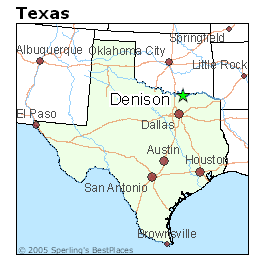
Roughly 20 years later (in the 1880s), a horticulturalist named Thomas Munson in Denison, Texas (previously educated in agricultural sciences at what would become the University of Kentucky) developed rootstocks that resisted phylloxera and adapted well to a variety of different soils that could be grafted onto with wine grape cuttings. By the late 1880s, thousands of bundles of NORTH TEXAS rootstocks were being shipped to the wine making world [including France where Munson was named a chevalier (and/or knight) for his efforts that saved the vineyards of Europe], and grape growers were able to begin grafting their wine grape vines onto them.

So does that mean that nearly all of the wine grape vines in the world are partially rooted here in TEXAS? Things that make you go… “Hmm”